LWV Klamath County Posts

LWVOR 2020 Ballot Measure Positions

The November 3, 2020 general election is coming! And not only candidates are on the ballot. There are several measures that voters will decide on as well.

See more information HERE.

The LWVOR Board takes these positions for Oregon November 2020 ballot measures.


Measure 107: Campaign Finance – SUPPORT 

“Amends Constitution: Allows laws limiting political campaign contributions and expenditures, requiring disclosure of political campaign contributions and expenditures, and requiring political campaign advertisements to identify who paid for them.”

Campaign finance reform has been an issue at all levels of government elections for many years. LWVOR has supported contribution limits for local and state elections whenever there has been the opportunity. This is a referral from the Legislature and is a Constitutional amendment. Until a recent Oregon Supreme Court decision, courts had held that the Constitution’s free-speech provision was contrary to contribution limits.

This ballot measure will make sure that campaign contributions are not speech and that campaign contribution limits may be imposed.


Measure 108: tobacco taxes – SUPPORT

Another legislative referral, that “Increases cigarette and cigar taxes. Establishes tax on e-cigarettes and nicotine vaping devices. Funds health programs.”

It will help to stop some young people from taking up unhealthful habits. Oregon’s taxes on these items are below those in Washington and California. This will raise the taxes to be on a par with those states.

Measure 109: psilocybin – NO POSITION

“Allows manufacture, delivery, administration of psilocybin at supervised, licensed facilities; imposes two-year development period.”

The League has no position to support or oppose this ballot measure.


Measure 110: decriminalizing, then funding addiction treatment – SUPPORT

This measure states, “Provides statewide addiction/recovery services; marijuana taxes partially finance; reclassifies possession/penalties for specified drugs.”

The League has several positions on which to base our support, including:


LWVOR Health Policy, Adult Mental Health in Oregon (1987, 2001, 2008): This position states that the mental health delivery system should include adults with alcohol and drug addiction and that the concept of care, treatment, and support should occur “in the least restrictive environment possible.”


LWVUS Sentencing Policy (2012): Alternatives to imprisonment should be explored and utilized, taking into consideration the circumstances and nature of the crime. LWVUS opposes mandatory minimum sentences for drug offenses.”


LWVUS Principle: “No person or group should suffer legal, economic, or administrative discrimination.”


There is a long list of organizations working toward racial justice that support this measure. The Board concluded that because people of color make up a disproportionate group of those who are incarcerated, many for drug related charges, the League should stand in solidarity with them in supporting this ballot measure.

Vote 411 website informs voters!

The League of Women Voters was created 100 years ago to support women voters, and all voters. This has remained the first focus of this national organization. Here in Oregon the league has followed in these footsteps.

Here is the LWV Oregon’s web page that gives all the information a voter will need to fully participate in our democracy.

VOTE OREGON

Find more information HERE and HERE.

VOTE411.org is now available in Spanish

Supporting Spanish-speaking voters through VOTE411 has long been a dream at the League, and we are so grateful to the strong partnership of the NALEO Educational Fund (National Association of Latino Elected and Appointed Officials) team in making this a reality. Together, we’ve made the critical election information that voters rely on available in both English and Spanish.

VOTE411 is expected to support approximately 10 million people in the United States through Election Day on November 3, and having the resources in Spanish makes the information even more accessible. 

With so many changes to election information this cycle, VOTE411 is the best tool to keep voters updated on the changes and to counter misinformation about elections. Just as it did during the primaries, VOTE411 will have alerts in both English and Spanish over coming weeks with any late changes that impact voters.

September is voter registration month, and we know millions of voters will be casting their ballots before November 3. VOTE411 has early and absentee/mail-in voting information for every voter in the country. It’s not too soon to check your registration.

How Mail-in Balloting Works

Mail-in Balloting: the issues

How does mail-in balloting work? This issue has been discussed widely in public media recently. Some claim it’s invalid, or subject to corruption. Some say it’s unsafe, or even undemocratic. Of course, Oregon has used this voting procedure for many years. The LWV strongly supports voting rights for all- it’s the foundation of our organization.

There has been a lot written on these questions (not including news media):

The Brookings Institute

National Geographic (for a historical perspective)

from the US Postal Service

the ACLU

MIT Election Lab

National Conference of State Legislatures

Mail-in Balloting: How it Works

Here in Oregon, voters have become used to this process. Below is a video prepared by Wasco County that illustrates how this process works.

https://drive.google.com/file/d/12F9LWwLHZxa4n_tkvpxne4hFaJpRw22d/preview

Your support is also essential!

  • Know your voting rights
  • Be prepared to participate
  • Support others to participate
  • Find accurate information and share it with others
  • Don’t lose your voting right due to propaganda

2020 US Census: Update

The 2020 US Census seems to be lost, among the pandemic and political news. But it’s not! Its shape and methods have changed, but it is an ongoing process. Below find some information from the official 2020 US Census website about where it currently stands.

Response Rates

The 2020 Census is underway. Keep tabs on how many households in your community have responded with this map of self-response rates from across the country.

Find out HERE.

Are You Up to the Challenge?

Census results shape the future of communities, as census data informs how billions of dollars in federal funds are distributed for health clinics, school lunch programs, disaster recovery initiatives, and other critical programs and services for the next 10 years.

So, while you keep tabs on local response rates, encourage others in your community to respond to the 2020 Census.

The Census Bureau is challenging everyone to help ensure a complete and accurate count in 2020.

Share information on your social media channels about the census and why it’s important to respond. 2020 Census partners and stakeholders, media members, government officials, and others can all play a role in ensuring that everyone is counted once, only once, and in the right place.

Spread the Word

The 2020 Census is more than a population count. It’s an opportunity to shape your community’s future. Through your social media channels, your voice can make a difference.

Set the Record Straight

An accurate count is critical to communities across the country. Don’t let misinformation keep your friends and family members from responding.

One of the best ways you can show your support for the 2020 Census is by making sure you know the facts.

Review basic facts about the 2020 Census and how the Census Bureau protects your data—and then share these facts with others.

If you have questions about something you’ve heard about the census, visit Fighting 2020 Census Rumors to get the most accurate information.

Harvard Case Study Martin Luther King and the Struggle for Black Voting Rights (1965)

Thursday August 20th, 7PM via Zoom Register Here

Join us for a community discussion led by Alisa Harvey to deepen our understanding of American democracy. The topic we will explore is Martin Luther King and the Voting Rights Act.  This has particular resonance today.
Ms. Harvey will use the Harvard Case Study Method, which is an interactive teaching style that will be new to many of us.

Using this method, we will see the events as they unfolded in real-time.  “The intention behind teaching these cases is to help students and the community recognize the importance of being engaged, and encouraging public discourse on these critical issues with historical knowledge as people make decisions with regard to voting,” Ms. Harvey says. Students and community members will think about the legacy of equality efforts in America and make connections to contemporary rights and protest movements.


To attend the event, pre-registration is required using the link:  http://lwvor.org/oregoncivics/ 

The 20-page case study and questions will be emailed to participants upon registration prior to the event to allow time for study and to formulate answers to discussion questions in advance.

Ms. Harvey was sponsored by the League of Women Voters of Oregon to train on the Harvard Case Study method in Boston with Harvard Professor David Moss. She applied the method in her classes this past school year and will now give the community the opportunity to take part in a case study.


Join us Thursday, August 20th at 7:00pm via Zoom. Please register at http://lwvor.org/oregoncivics/  far enough in advance to study the material before the meeting.

For more information, see HERE.

New Documentary: The State of Equality

In the lead up to the 100th Anniversary of the 19th Amendment we wanted to bring to your attention the film The State of Equality– a documentary that highlights how the West led the country on women’s suffrage a full 50 years before the passage of the 19th Amendment. The broadcast 56 minute version was a co-production of Wyoming PBS and Caldera Productions and can be viewed for free on YouTube. We have also created a short 20 minute version of the film that is perfect for in person or virtual screening & discussion events.

The short version is available on Amazon for home viewing and for organizations looking to screen the film for a small licensing feeThe State of Equality was also recently nominated for an Emmy for best historical documentary with the awards being announced this Saturday. 
As the voting season heats up we hope that The State of Equality can be utilized for gatherings, events, virtual screenings or more to celebrate the 19th Amendment 100th anniversary, learn about the pioneers of women voting, or discuss voting access in your state by learning about the history of the vote in the West.

For more information: https://calderaproductions.com/state-of-equality/

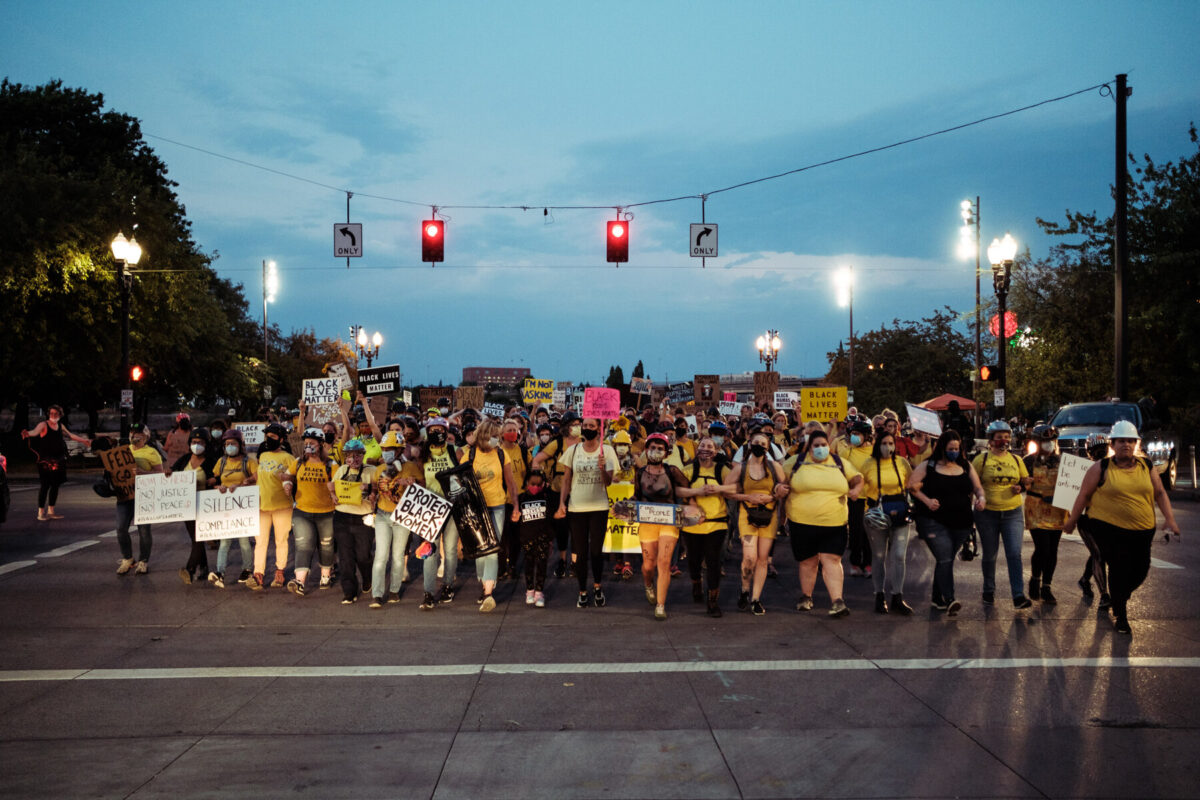
LWVOR Statement on Portland Protests

FOR IMMEDIATE RELEASE                                                          7/27/2020 


CONTACT Rebecca Gladstone, President                                                          503.581.5722 www.lwvor.orglwvor@lwvor.org


[Salem, Oregon] – The League of Women Voters of Oregon (LWVOR) calls for civil discourse amid Portland’s ongoing protests. We reaffirm Americans’ First Amendment right to peaceful protest. Our 100 year-old League defends every American’s constitutional rights for racial justice, voting rights, and equal opportunity.
Courthouses should be havens of justice and safety for all but attention to structural vandalism is obscuring racial justice efforts. Pandemic defense and recovery funds fall short while federal spending to “dominate” frightens citizens. This unconstitutional approach is failing as more citizens become enraged. The federal help we desperately need is clear response to the protest issues: centuries of racial injustice, discrimination, and continued racial inequality. Governments at all levels need to promote economic opportunity, improve voting rights for all, combat police brutality, and honor our constitutional rights to free speech and to “peaceably assemble and petition the Government for a redress of grievances.”
Unrequested federal intervention is obstructing legitimate public demands. ThePortland protesters are mostly peaceful, from all backgrounds, ages, and professions. Our Leagues, LWVUS, LWVPDX, and LWVOR, call for racial justice and police reform.Unconstitutional and criminal actions must stop.Becky Gladstone, President, LWVOR
We support Oregon’s police reform bill passed in June: HB 4208 To proclaim Black Lives Matter, review current and historic police experiences; prohibit tear gas except during riots, require adequate announcements and warnings. NEW: We will testify to Oregon’s new Joint Committee on Transparent Policing and Use of Force Reform for these “legislative concepts” directly relevant today:

  • LC 742 Regulate “chemical incapacitants, kinetic impact projectiles, and sound devices; define riot conditions”. Think of tear gas, pepper spray, rubber bullets, and sound bombs.
  • LC 743 Establish police ID and visible identification requirements (show ID on request), define police uniform and vehicle marking requirements.
  • LC 744 Officers are required to intervene and report misconduct by another officer.
  • LC 745 Restrict “choke holds”; amendments are being discussed to ban them.
  • LC 746 Establish state-wide policing standards. If an arbitrator finds misconduct, discipline cannot be overturned and discipline matrix/guidelines will not be part of collective bargaining.
  • LC 748 (not yet publicly posted) Police who relocate to avoid discipline will be tracked in a state-wide police database being established. Those hiring police must consult previous employers.

“The overwhelming majority of our protesters are peaceful. Most of our police are conscientious individuals trying to do a good job. We now need to get together as human beings and work out practical policies to reduce racism and unnecessary use of force.” – Barbara Ross, LWVOR Public Safety Advocate.
See the LWVUS response to Portland protests and in Portland, LWVPDX Demands Equal Rights for All and is studying police accountability and reform. The League continues to monitor and advocate at local, state and national levels.

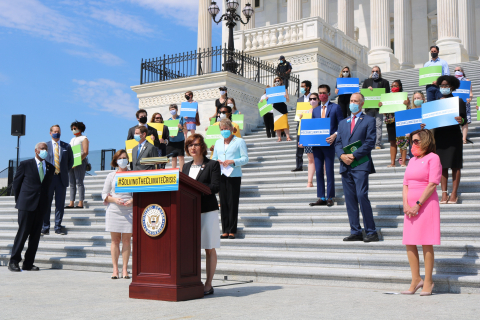
Congressional Update: Select Committee on Climate Crisis

After more than a year of hearings, meetings, and briefings, the Select Committee on the Climate Crisis has released a comprehensive plan that will protect our planet and make our communities and economy stronger, healthier, and fairer. You can read the full report, “Solving the Climate Crisis: The Congressional Action Plan for a Clean Energy Economy and a Healthy, Resilient, and Just America.”

The committee was charged with crafting a bold, science-based, comprehensive climate action plan to address the climate crisis and reach net-zero emissions no later than mid-century and net-negative thereafter. It focused on the needs of frontline communities, opportunities to accelerate our transition to a 100 percent clean energy economy, and ways to create good-paying jobs. The final Climate Action Plan reflects an outpouring of input from thousands of community members and leaders from Oregon and around the country. 

According to an independent analysis and modeling, implementing their plan would:

  • Reduce net overall U.S. greenhouse gas emissions by 37 percent below 2010 levels in 2030, and 88 percent below 2010 levels in 2050;
  • Provide nearly $8 trillion in cumulative climate and health benefits through 2050; and
  • Avoid 62,000 premature deaths annually by 2050.

The Climate Action Plan is a roadmap for Congress, and you can learn more about it here. Ms. Bonamici, 1st district of Oregon member of Congress sat on the committee and is working to promote its goals. She says:

Addressing the Scale of the Crisis

As we know too well in Northwest Oregon, climate change is already our reality. The science is clear and alarming, and we must act immediately. According to an independent analysis and modeling, implementing this Climate Action Plan would:

  • Reduce net overall U.S. greenhouse gas emissions by 37% below 2010 levels in 2030, and 88% below 2010 levels in 2050;
  • Provide nearly $8 trillion in cumulative climate and health benefits through 2050; and
  • Avoid 62,000 premature deaths annually by 2050.

Economic, environmental, and racial justice are intertwined, and equity is at the core of our Climate Action Plan. Addressing the climate crisis will create millions of good-paying, high-quality jobs that can help working families and displaced workers recover from the economic collapse caused by the COVID-19 pandemic. Low-income communities, communities of color, and Tribal and Indigenous communities have not only been hardest hit by the COVID-19 pandemic; they have also been disproportionately affected by the climate crisis. Building a resilient, clean economy using this climate action framework will boost our economic recovery and allow us to begin to repair the legacy of environmental racism and pollution that has burdened low-income communities and communities of color for decades.

How We Developed the Climate Action Plan

The process to develop our comprehensive climate action plan was robust. The Select Committee held 17 official hearings and six member-level round table discussions on a broad range of topics:

  • Solving the Climate Crisis: Drawing Down Carbon and Building Up the American Economy
  • Roundtable with Los Angeles Mayor Eric Garcetti
  • Creating a Climate Resilient America
  • Solving the Climate Crisis: Ramping Up Renewables
  • Roundtable on Electricity Transmission Infrastructure
  • Roundtable on Electricity Market Design
  • Solving the Climate Crisis: Cleaning Up Heavy Duty Vehicles, Protecting Communities
  • Creating a Climate Resilient America: Business Views on the Costs of the Climate Crisis
  • Solving the Climate Crisis: Manufacturing Jobs for America’s Workers
  • Voices Leading the Next Generation on the Global Climate Crisis (Joint Hearing with House Committee on Foreign Affairs)
  • Roundtable on Nuclear Power
  • Solving the Climate Crisis: Reducing Industrial Emissions Through U.S. Innovation
  • Solving the Climate Crisis: Cleaner, Stronger Buildings
  • Solving the Climate Crisis: Natural Solutions to Cutting Pollution and Building Resilience
  • Solving the Climate Crisis: Opportunities in Agriculture
  • Creating a Climate Resilient America: Reducing Risks and Costs
  • Creating a Climate Resilient America: Smart Finance for Strong Communities
  • Creating a Climate Resilient America: Overcoming the Health Risks of the Climate Crisis
  • Discussion with the National Congress of American Indians
  • Between February 2020 and the release of this report, the Select Committee met with and heard from experts to discuss the effects of the COVID-19 pandemic and economic slowdown on clean energy, climate resilience, and public health. 

The Select Committee also requested information from experts and the public, receiving more than 700 substantive responses from stakeholders across the country.

Tree and Bench Commemorative Ceremony August 18, 2020

LWV Klamath bench and trees
New bench and trees
Commemorative Plaque

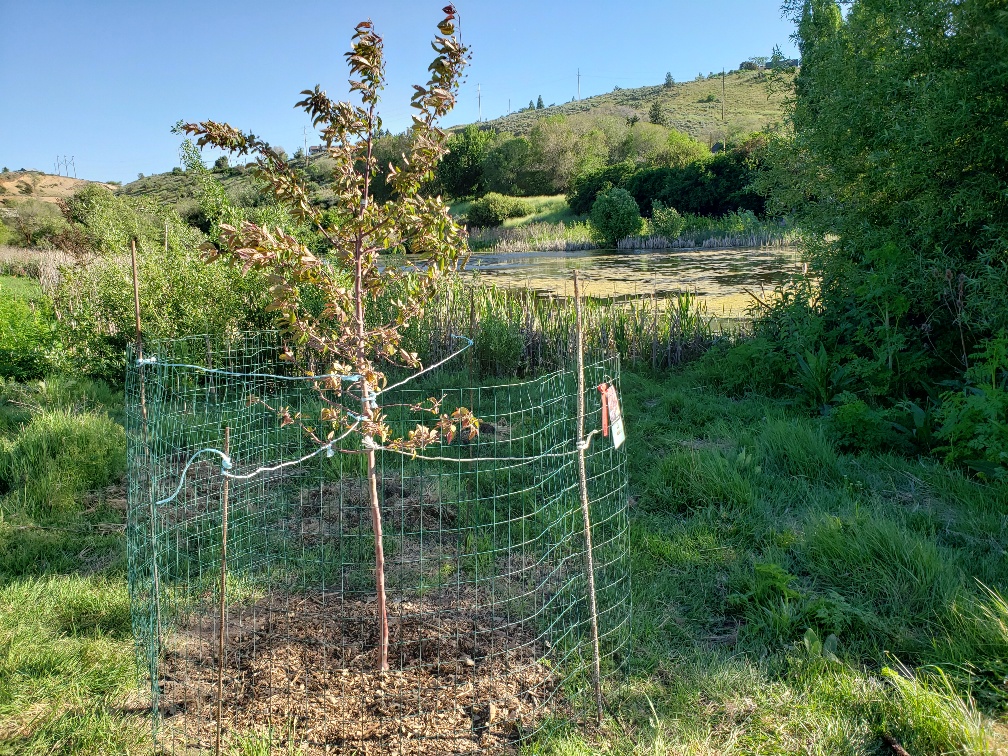
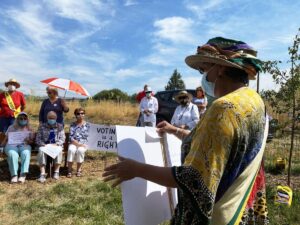
On Tuesday August 18, 2020, at 11 AM, the LWV Klamath Falls participated in one final commemoration ceremony to honor the 100th anniversary of the LWV and the passage of the 19th amendment, gaining women the right to vote. Two trees recently planted were joined by a new bench with a plaque on it. The tree and bench are located on the Klamath Wingwatchers trail, located near the Visitor Center at 205 Riverside Drive on the west side of Highway 97.

Planting the commemorative tree
Tree planting
Dedicated LWV Klamath members and friends

Herald and News Story

It took the prompting of a mother to her son to help ratify the 19th Amendment on Aug. 18, 1920, clearing the way for voting rights for many women whose efforts to attain it had spanned decades.

That day, State Rep. Harry T. Burn’s vote garnered the two-thirds majority needed to make the 19th Amendment official. Many, mostly white women could officially vote eight days later.

To celebrate the 100th Anniversary of the ratification, League of Women Voters of Klamath County charted their own path down the Ken Hay Nature Trail on Tuesday, where they celebrated 100 years of voting rights, commemorated the efforts that led to the ratification, and shared about the struggles that remain in the pursuit of voting.

The event is the third piece of what has been a year-long effort to mark 100 years of women earning the right to vote. Other pieces included a dramatic play and the book “Timeless Recipes: The Great Fight to win the Vote for Klamath County.”

Klamath Falls Mayor Carol Westfall, dressed in Suffrage purple and gold, marveled at the actions of Burns and his fellow legislators, and all the women who helped pave the way to the vote.

“It really changed the course of this nation,” she said.

Westfall was one of about 20 attendees, including founding members of the League of Women Voters of Klamath County, to join the walk along the portion of the Klamath Wingwatcher’s Lake Ewauna Nature Trail. Many dressed in hats, and/or carried signage that reflected the time period of Suffrage Movement and that still resonates today: “Votes for Women,” “Equality for Women,” and “Voting is a right.”

Leslie Lowe, longtime treasurer and member of League Women Voters of Klamath County, emphasized the long history of securing a woman’s right to vote dates back further than the centennial anniversary.

“It’s really important to remember that that the fight to get the right to vote and actually be able to cast that vote has gone on since before the Declaration of Independence,” Lowe said. “It’s not just history, it’s alive today.”

Women in Klamath County had been able to vote since Nov. 5, 1912, when Klamath County men voted in favor 919-688.

Joan Balin Staunton, one of two surviving founding League of Women Voters founding members present, also helped start the Klamath County chapter in 1976 after moving to Klamath Falls from Federal Way, Washington.

Anita Ward, also a founding member, attended the event as well.

Staunton said both saw the chapter actively help institute Kindergarten in Klamath County before it became a statewide requirement.n She recalled efforts to get people registered to vote at grocery stores in town.

Staunton encourages women to take leadership roles and participate in the community.

“It’s so important for women to be active,” Staunton said.

Heather Tramp, executive director of Klamath County Chamber of Commerce, said that from an early age, her great-grandmother instilled in her the importance of voting.

Tramp said her great-grandmother grew up during a time when women could not vote and the impact of that has not been lost on her.

“I’m thankful for the women and the men that stepped up and got us that right,” Tramp said. “That led me to a lifelong passion for being involved at our local, our state level, and our federal level.

Gutierrez, who also spoke at an event celebrating the centennial on Feb. 9, emphasized that “women earned the right to vote.”

Gutierrez called the period that lead up to the ratification one of the “darkest” periods of history, in part due to hunger strikes and oppression toward women who took part in the Suffrage Movement.

“Women went to jail for this cause,” Gutierrez said.

“Timeless Recipes: The Great Fight to win the Vote for Klamath County,” the 100th Anniversary cookbook and history lesson elaborates, describing the experiences of women who fought for voting rights:

“They picketed for the right to vote, were put in jail, and some declared insane. Jail guards grabbed, dragged, beat, choked, slammed, pinched, twisted, and kicked the women, with no consequences to the guards.”

Lowe emphasized than in 1920 and beyond, despite having the technical right to vote, women of color still had many barriers between them and the polls.

“Although they had the right to vote, they didn’t have the opportunity to vote because of poll taxes and a whole variety of ways that they were kept from the polls,” said Leslie Lowe, treasurer of the League of Women Voters of Klamath County, “Until the Civil Rights Act of 1965, and here we are today, 55 years later, and we’re still dealing with the same oppression.”

Emily Strauss, president of the League of Women Voters of Klamath County, spoke of additional barriers to voters on behalf of Diane Shockey, who served the past year as chair of a committee to organize the centennial celebrations. Shockey is dealing with COVID-19 and is expected to recover, according to Strauss.

Wingwatchers Trail Info

Klamath Wingwatchers has developed a 2.5 mile trail along the western shore of Lake Ewauna and on both sides of Highway 97 as it enters into downtown Klamath Falls. Along this trail, Wingwatchers planted over 1500 trees, shrubs, and other plants that provide shelter and food for the many species of wildlife that utilize the area. Picnic tables and benches, information kiosks, and signage enhance the walking experience. Pets are welcome so long as they are leashed and owners use poop bags, which are provided at the start of each trail. Licensed bicycles are permitted so long as the rider is respectful of pedestrians. Brochures at the head of each trail tell about native plants and the trail. Here is our interpretive guide. Here is our native plants brochure.

planting LWV commemorative tree
Planting our commemorative tree

People Not Politicians

Media Statement                           

July 2, 2020

Contact
Norman Turrill, (503) 386-7996

People Not Politicians submit tens of thousands of petition signatures to end gerrymandering in Oregon

SALEM—Today, the People Not Politicians campaign, the broad and diverse coalition that has come together to end gerrymandering in Oregon, submitted tens of thousands of signatures to the Oregon Secretary of State for Initiative Petition 57 (“IP57”), just days after filing a lawsuit in Federal Court to ensure that all of the signatures gathered to qualify its redistricting reform initiative for the November 2020 ballot would count. 

“People Not Politicians is committed to ensuring that redistricting reform happens before Oregon draws new maps in 2021. We forged ahead through unprecedented times with an unprecedented signature gathering program, bringing in tens of thousands of petitions from Oregonians in barely over one month,” said Norman Turrill, Chief Petitioner and Chair of the People Not Politicians campaign committee.

“We filed our lawsuit on Tuesday asking the Court to recognize the extreme and unprecedented circumstances of a global pandemic that impacted the signature gathering process in Oregon, and to protect our First Amendment rights by reducing the barriers to the ballot,” Turrill continued.

Initiative Petition 57, filed in November 2019, would create the Oregon Citizens Redistricting Commission and put redistricting in the hands of Oregonians, not our politicians. The commission would consist of 12 Oregonians who applied and were selected from qualified applicants – four from the first largest political party, four from the second largest political party, and four others who are third party members or non-affiliated. Major donors to political candidates or parties would not be eligible. Neither would elected-officials, political party officials or their family members. Commissioners would be selected to represent the broad diversity of Oregonians.

After succeeding through multiple politically-motivated legal challenges and delays, the campaign was approved to collect signatures in April, weeks after Oregon Governor Kate Brown issued several emergency orders and the Stay Home, Save Lives program, which, while necessary for public health, effectively ended all possibility of traditional in-person signature gathering efforts.

After weeks of brainstorming and preparation, at the end of May, the People Not Politicians campaign launched a novel, creative and aggressive no-contact signature gathering campaign to collect signatures through direct mail, e-petitions and virtual grassroots communications efforts to qualify for the November ballot.

“Our first priority, of course, has been to ensure the safety and health of all Oregonians during this time and we adhered to the social distancing measures under Governor Brown’s Executive Orders with an abundance of caution,” said Candalynn Johnson, Deputy Campaign Manager for People Not Politicians. “But—democracy doesn’t stop. Redistricting will happen in 2021, and Oregonians deserve a redistricting process that is about the people, not politicians. During this time of unrest, our need to protect and advance the democratic process and ensure all Oregonians are represented is more important than ever.”

The initiative campaign coalition came together in April of 2019 and has been led by the League of Women Voters of Oregon, Oregon Farm Bureau, Common Cause Oregon, the Independent Party of Oregon, NAACP Eugene/Springfield Branch, Taxpayer Association of Oregon, OSPIRG, Oregon’s Progressive Party, and tens of thousands of Oregonians who supported the effort to remove conflicts of interest from drawing of voter lines.

League of Women Voters of Klamath County