Mission: The website and our network are dedicated to educating and mobilizing League members to work toward legislation and other reforms that enact the goals of our LWVUS health care position, with a strong focus on expanded and improved Medicare for All (a single-payer system). The materials are varied for different audiences, and they include pointers to resources for those who want to delve more deeply, and/or would like to do programming for local League or community meetings.
For this month, we explore health care in Rural areas, especially what it might mean for hastening fundamental change in health care administration. That is, it is not a description of how health systems are working in a rural setting, but rather a brief round-up of examples where they aren’t working. We want to bring attention to what might be a brief window of opportunity to change directions. For now, the hopeful note in the slogan of National Rural Health Day, “the Power of Rural,” still resonates, especially if the public sector has less competition from the commercial sector and its lobbyists. However, the non-profit financial watchdog organization, Private Equity Stakeholders Project, (PESP) has sounded the alarm that Private Equity is already “descending” on rural health. Their mission is to do the research and also work with communities to bring about change.
The newsletter also shares a couple of pieces from our “mailbag” which continue the theme of greed that seems to be all over the media. This month, it’s big Pharma Greed and unpunished insurance fraud.
Oregon receives national praise for Voting in Oregon Feels Good ad campaign.
Last year, Secretary Fagan and the Oregon Elections Division used an innovative approach to fight false election information: ads! The Voting In Oregon Feels Good campaign addressed issues like election security and Oregon’s new postmark rule. The ads were viewed 14 million times during the fall of 2022 and drove a 259% increase in traffic to election information online. Hundreds of thousands of Oregonians viewed accurate information who probably wouldn’t have without this public education campaign.
The campaign is receiving national praise for its innovative use of ads to “pre-bunk” false information. Staff members from the Oregon Secretary of State’s office presented the campaign at the National Association of State Elections Directors annual conference on February 17.
State Archives Featured Black In Oregon in February.
As part of our recognition of Black History Month, the State Archives featured Black In Oregon, an online exhibit that uses archival records to illuminate the courage and resilience of Black pioneers who built lives for themselves and their families in Oregon.
The exhibit puts their experiences in context with chronologies and related resources before telling their stories augmented by photos and original documents.
Secretary Fagan Released the 2023 Protect Our Democracy Agenda.
Anti-democracy forces in our country are eroding trust and threatening our right to vote. In Oregon, we have a strong pro-democracy track record and the 2023 Protect Our Democracy Agenda is a roadmap for how Oregon can defend its record.
The Protect our Democracy Agenda includes five areas of focus where we can build on Oregon’s history as a pro-democracy state. They include Investing in free, fair, accessible and secure elections, expanding access to our democracy, election security, successfully implementing campaign finance reform and updates to election laws
“The League of Women Voters believes democratic government depends upon the informed and active participation of its citizens and requires that governmental bodies protect the citizen’s right to know by giving adequate notice of proposed actions, holding open meetings, and making public records accessible.” LWVUS Principles “We must promote an open governmental system that is representative, accountable and responsive.” LWVUS Representative Government position Citizen participation and access are also important parts of LWVOR positions on Land Use and the Judicial System, and LWVUS positions on Campaign Finance, Citizens Right to Know/ Citizen Participation, Environmental Protection and Pollution Control, Natural Resources Public Participation, United Nations, and International Relations Trade Policy. Because of these scattered positions, we collect here our combined history of advocacy for Citizen Participation and Access.
JOIN US. We work to build a free, fair, participatory democracy with open elections and a majority rule.
Redistricting is the process of redrawing the lines that define political districts. For legislative and congressional districts, this typically occurs after the completion of the federal census every ten years. Redistricting should change districts to more accurately reflect the changes in population and interests of constituents.
Every 10 years, the US Census requires that states must re-draw legislative and congressional electoral districts to account for population changes. Currently, these legislative and congressional districts in Oregon are drawn by legislators and subject to a veto by the Governor.
Redistricting in Oregon
New district lines based on the 2020 census will be especially important because Oregon is projected to gain a sixth U.S. congressional seat due to population growth.
Only four states in the West – including Oregon – don’t have some form of independent redistricting.
Only twice since 1911 has the Oregon legislature passed a redistricting plan that became the final adopted plan. Oregon politicians have failed more often than not.
Congressional and legislative redistricting should advance the fundamental purposes of representative democracy and a republican form of government by affording the people a meaningful choice in electing their representatives and holding the government accountable to the people. The League of Women Voters of Oregon believes that the Oregon legislative and congressional redistricting system should be efficient, adequately funded, based on well-defined criteria, subject to a reasonable and effective timetable, and have an open and public process.
Any redistricting plan should assure that voters are effectively able to hold their public officials accountable, responsible, and responsive, and be based on the following criteria:
Adhere to all federal constitutional and legal requirements, such as that every district should have equal population, be contiguous, and meet the requirements of the Voting Rights Act;
Promote competitiveness and partisan fairness;
Consider other criteria, such as respect for political subdivisions, communities of interest, and geographic barriers.
Any redistricting plan should be developed independently of the Legislature in a nonpartisan manner with substantial public input. The Legislature may be afforded an opportunity to review the plan and accept or reject it.
The Oregon Supreme Court should promptly review and rule on any challenge to a redistricting plan and require adjustments if the criteria have not been met.
Oregon should conduct redistricting only once during each decade following the federal census.
Do you believe in Fair Voter Representation? Volunteer!
The LWVOR is part of and is a leader of the People Not Politicians coalition. You may already know that PNP has refiled its redistricting initiative for 2024 as IP 13 and IP 14. We are preparing for the time when we receive certified ballot titles and begin gathering signatures in earnest for only one of these petitions. Part of our plan is to mail a new petition to many of those voters who signed IP 57 two years ago. To do this we have created an online process to verify the IP 57 signatures with voter registration records and add them to a database. We can then use that database for future mailings and other purposes. You can do this volunteer work from home using your home computer and a website. Very little computer skill is needed for this work, and you may do the work as you have time available. If you can help, please contact Chris Cobey or Norman Turrill.
False information presents an ongoing threat to elections administration. The National Association of Secretaries of State believes that accurate information, when delivered early and by a trusted messenger, can help prevent the spread of false information.
Did you know?
Oregon’s elections are secure. The voting equipment is never connected to the internet. There are no routers connected to the tabulation system and there never have been.
Did you know?
Oregon performs post-election reviews after every election that includes a federal or state-wide contest.
How does Oregon ensure the results of elections?
The post-election reviews across the state after the November 3, 2020 general election showed conclusively that the results of the election were accurately reported and certified, as they have since Oregon started conducting these audits in 2008. You can review them here where they are publicly posted for each county.
Oregon law requires random sampling hand counts or risk-limiting audits in all counties following Primary, General, and Special elections. All of Oregon’s 36 county elections officials conducted these reviews, which require hand recounts of ballots, for the 2020 General Elections. All reviews confirmed the certified results.
Forensic audits are not currently a part of conducting elections in Oregon. Although the term “forensic auditing” is widely used and has an accepted definition in fields such as finance and accounting, it does not yet have a uniform definition in regard to elections. In the financial world, forensic audits typically trace issues back to individual transactions or people – this cannot be done in an election, as voters have the right to and expectation of a secret ballot.
Recent efforts in Arizona and Pennsylvania are not fact-finding missions. Rather, they are based on conspiracy theories and designed to keep dangerous lies about the 2020 election alive to justify future attacks on the freedom to vote. As the U.S. Department of Justice recently warned, when election records are not under the control of trusted election officials, there are significant security risks.
For further information on Oregon election laws and post-election procedures:
No. Oregon elections are secure and protected against voter fraud in all but exceedingly rare instances. In 2020, out of millions of votes cast, residents and local elections officials reported 140 instances of potential voter fraud. Of these 140 cases, four cases were referred to the Oregon Department of Justice and two of those are pending resolution.
By comparison, in 2018 there were a total of 84 total reports of voter fraud. Two were referred to the Department of Justice.
A recent review of the vote by mail system by the state’s Legislative Fiscal Office found from 2000-2019 there were approximately 61 million ballots cast. Of those, 38 criminal convictions of voter fraud were obtained. This amounts to a .00006% rate.
What controls are in place to protect against cybercriminals?
We closely monitor our systems for suspicious activity and frequently test for vulnerabilities. Our staff are routinely trained on how to appropriately handle suspicious email and other threats to prevent unauthorized access or tampering.
More specifically, we have programs, policies, and plans in place to address and mitigate security breaches. We work with partners such as: the Department of Homeland Security (DHS), the Cybersecurity and Infrastructure Security Agency (CISA), the Elections Infrastructure Information Sharing and Analysis Center (EI-ISAC), the National Association of Secretaries of State (NASS), and the National Association of State Election Directors (NASED) to ensure best practices are used to protect our elections and their supporting systems.
We practice Defense in Depth with administrative, technical, and managerial security controls. Layers of security controls provide several ways of monitoring and responding to malicious access attempts to our systems. Any successful access to our system has been reviewed by multiple security checks and verifications.
We routinely perform threat analysis and risk assessments. Assessments are conducted by internal staff as well as contracted third parties. As a result, we continue to improve security processes and protections to maintain secure, private, and accurate election infrastructure.
Preventative, Detection, and Response Measures
We use preventative, detection, and response measures including:
Risk and vulnerability management Network and endpoint security Continuous monitoring of systems Incident management and response planning Routine security training
A new law known as the “postmark rule” will ensure that every ballot cast on time gets counted by allowing elections officials to count all ballots postmarked by Election Day, even if they arrive at the elections office up to 7 days later.
What this means:
Some ballots that were cast on time may arrive at elections offices after Election Day. So the total number of votes will go up in the days following the election as more votes come in. These are not late votes. Every ballot counted will have been cast on time, which elections officials can verify by a USPS postmark.
This means that election results may take a little longer to compile than in previous years. Even if the results come in a little slower, they will be accurate.
The Oregon Legislature passed the new law in 2021.
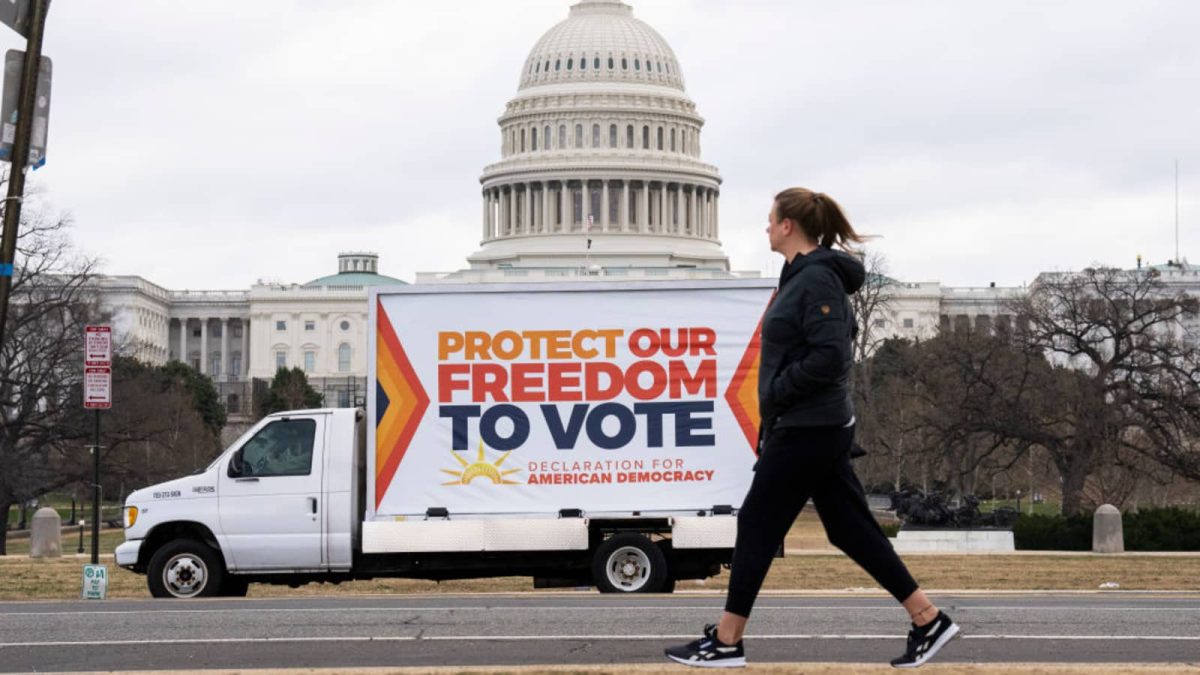
We are pleased to announce their latest work on Your Human Right to Vote.Once again they highlight work of the global community, starting with the 1948 Universal Declaration of Human Rights. This fundamental document states plainly and unequivocally–the right to vote is a human right. This right is enshrined in many international covenants adopted by Member States of the United Nations. This right is also included in Amendments to the US Constitution.
Yet, we cannot be complacent–we must continue to protect this human right to vote and raise awareness of infringements on this right, especially in our local communities. We are mindful to Think Globally and Act Locally. Please see the overview of Your Human Right to Vote in their third Briefing Book, available for download here at no cost. https://www.hrsig.org/_files/ugd/1b370f_5bf53c25af8340da95c6b30238fad8cf.pdf and go to their website for a list of all their publications and presentations. (www.hrsig.org)
BE AN INFLUENCER
The Human Rights Special Interest Group acts to engage with communities as INFLUENCERS FORHUMAN RIGHTS through storytelling, presentations, advocacy, and publications. Below are some examples of people working in their community to ensure voting rights.
The Equal Rights Amendment has deep support from individuals and organizations from coast to coast, yet many of us are unsure of its status today. A recent publication, by our founding member Michele Thorne, explains the Amendment’s status and why the ERA is our 28th Amendment to the U.S. Constitution. The article is titled “A New Era for the ERA? Our 28th Amendment to the U.S. Constitution” and appeared in the Chicago Bar Association Record (May/June 2022). https://ad.wpcappserve.com/appcms/textarticle/index_articlepublish.html?art=10299
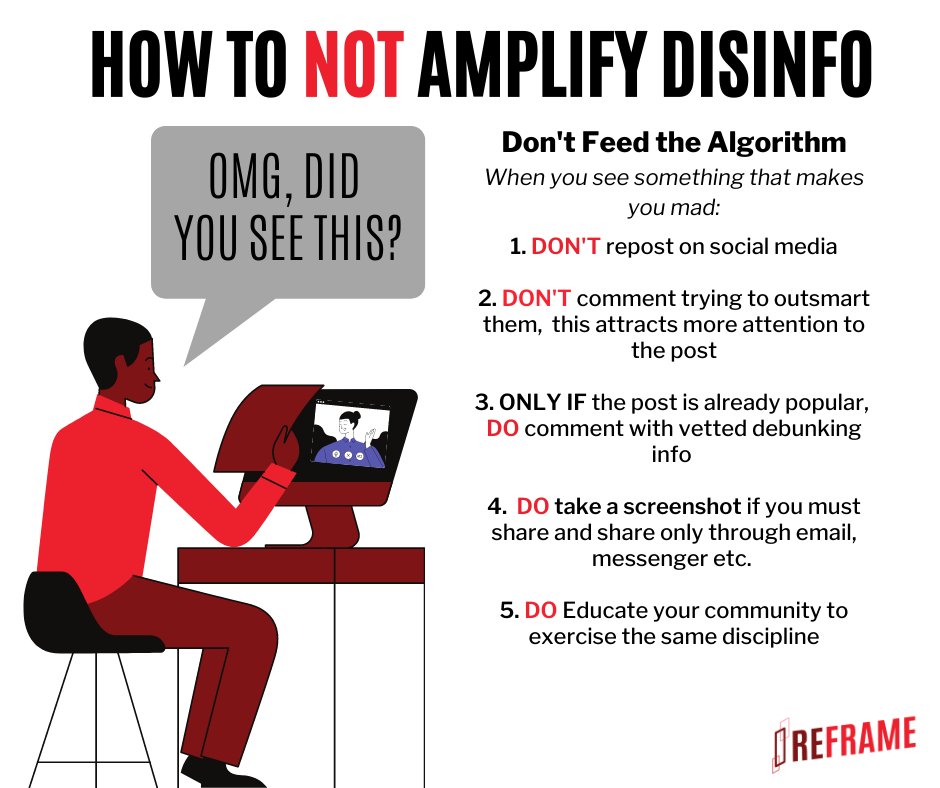
Accurate information about current events is essential, especially when talking about our human rights. Founding member Kathleen Montgomery helped develop a presentation titled Fight Truth Decay! Combat Disinformation, which she presented to local community groups, including the League of Women Voters of Orange Coast and the United Nations Association of Orange County. https://www.eventbrite.com/e/una-oc-meeting-hybrid-fight-truth-decay-combat-disinformation-tickets-401839772577
There will be a March for Women’s Rights on October 8, 2022 at noon here in Klamath Falls. The march is timed to coincide with the nationwide March for Women to be held that date. It is also timed to be just before the election since it is really important that we support candidates who will aggressively fight for us both here in Oregon, and in the US Congress and Senate.
The main sponsor of this event is Women’s March. They are a non-partisan organization with the stated mission of:
to harness the political power of diverse women and their communities to create transformative social change. Women’s March is a women-led movement providing intersectional education on a diverse range of issues and creating entry points for new grassroots activists & organizers to engage in their local communities through trainings, outreach programs and events. Women’s March is committed to dismantling systems of oppression through nonviolent resistance and building inclusive structures guided by self-determination, dignity and respect.
On the first full day of Donald Trump’s presidency, hundreds of thousands of people crowd into the U.S. capital for the Women’s March on Washington, a massive protest in the nation’s capital aimed largely at the Trump administration and the threat it represented to reproductive, civil and human rights.
At the same time, more than 3 million people in cities across the country and around the world held their own simultaneous protests in a global show of support for the resistance movement. It was the largest single-day protest in U.S. history.
The idea of the Women’s March began on the social networking website Facebook the day after the election, when a Hawaii woman named Teresa Shook voiced her opinion that a pro-woman march was needed as a reaction to Trump’s victory. After thousands of women signed up to march, veteran activists and organizers began planning a large-scale event scheduled for January 21, 2017, the day after Inauguration Day.
Leading up to the Women’s March on Washington, the organizers expected some 200,000 people to attend. As it turned out, as many as 500,000 showed up, with buses, trains, airplanes and packed cars ferrying large groups of protesters to the capital from far-flung locations. Many of the marchers donned pink clothing for the occasions, as well as the unofficial uniform of the march: pink knit hats with cat-like ears on top, dubbed “pussy hats” in a nod to Trump’s unfortunate word choice in the 2005 recording.
On the same day, millions more people took part in sister marches held in all 50 states and more than 30 foreign countries, ranging from Antarctica to Zimbabwe. According to later estimates collected by the Washington Post, some 4.1 million people reportedly took part in the various Women’s Marches across the United States, along with around 300,000 worldwide.
The protesters who took part in the various Women’s March events voiced their support for various causes, including women’s and reproductive rights, criminal justice, defense of the environment and the rights of immigrants, Muslims, gay and transgender people and the disabled—all of whom were seen as particularly vulnerable under the new administration.
Rather than a single-day demonstration, the Women’s March organizers and participants intended their protests as the start of a resistance movement. After the march in Washington, D.C., organizations like EMILY’s List and Planned Parenthood held workshops designed to encourage civic participation among women, including running for office.
Sources
“At 2.6 million strong, Women’s Marches crush expectations,” USA Today, January 22, 2017. “Shaded pink, women’s protest fills the streets of downtown L.A.,” Los Angeles Times, January 22, 2017. “This is what we learned by counting the women’s marches,” Washington Post, February 7, 2017. The March, Women’s March website.
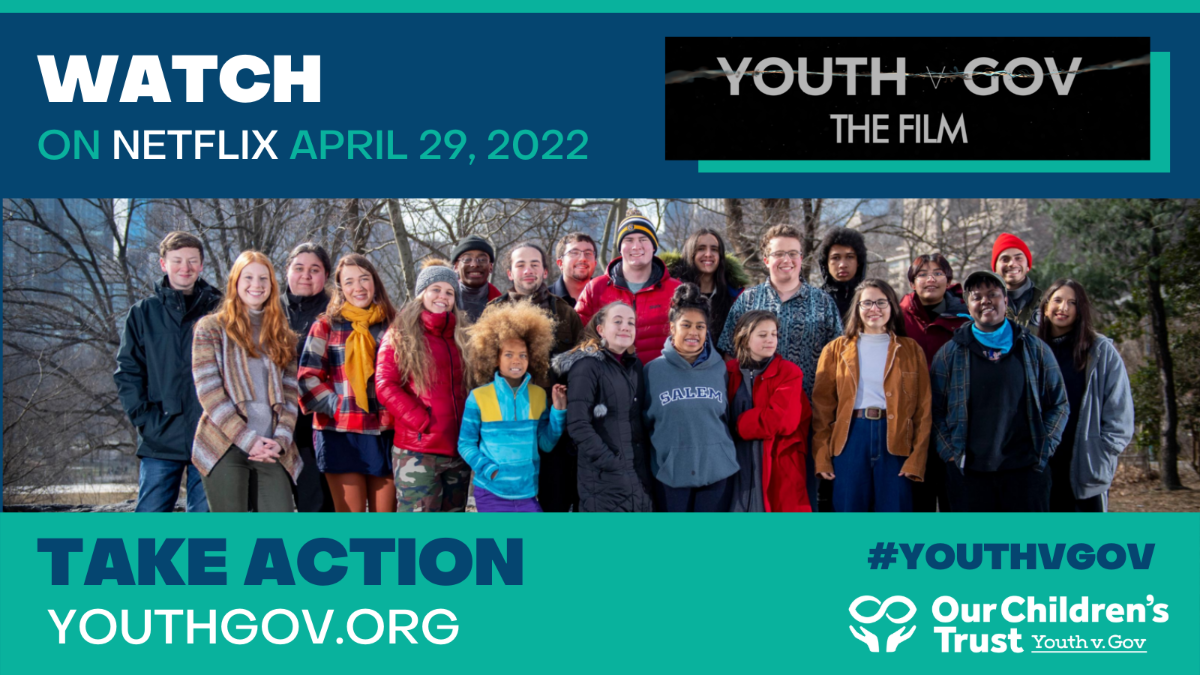
Our Children’s Trust has exciting news to share: “YOUTH v GOV” – the independent feature-length, award-winning documentary by acclaimed Director Christi Cooper, Barrelmaker Productions, and Vulcan Productions about their federal case, Juliana v. United States – will begin streaming globally on Netflix starting April 29th! This is an incredible opportunity to watch the story of the Juliana 21 and their critical climate case, all around the world!
The global release of this film – streaming in over 30 languages worldwide – will be the first opportunity millions of people around the world will have to see the stories of these brave young Americans. For millions around the world, it will be their first time hearing about this landmark climate case. And it will be the first time they learn about Our Children’s Trust and the critical work they do to help young climate leaders secure their legal rights to a safe climate.
Every person who sees the film can become an ally, an advocate, and a voice speaking out alongside and in support of the Juliana youth. The plaintiffs await a court decision that, if favorable, could soon put them back on the path to trial.
Tell others to watch it too! Share the film with everyone you know: friends, family, neighbors, co-workers.
Get Ready to Watch! One of the simplest but most powerful actions members of our community can take to support these young climate leaders in this moment is to watch the film and share it with others. Help spread the word so that people around the world learn about their case and the durable, sustainable solution to the accelerating climate crisis that these young people are seeking in our courts.
State and local Leagues, and individual League members, have a critical role to play in helping to limit future climate change and protect the planet.
The League is calling for prompt action to cut this country’s GHG emissions, invest in a clean energy economy, and help the world’s poorest countries tackle the challenges of climate change.
The League believes that climate change is a serious threat facing our nation and planet. The League believes that an international approach to combating climate change — including through energy conservation, air pollution controls, building resilience, and promotion of renewable resources — is necessary to protect public health and defend the overall integrity of the global ecosystem. The League supports climate goals and policies that are consistent with the best available climate science and that will ensure a stable climate system for future generations. Individuals, communities, and governments must continue to address this issue, while considering the ramifications of their decisions, at all levels — local, state, regional, national, and global.
Protecting our right to know is integral to the health of our democracy. Decisions that determine how our schools will be run, at what level community safety programs will be funded, and how land in our towns will be used impact our lives and are vital to our well-being. These kinds of decisions need to be made with public input and oversight. One important way to ensure that is to observe government meetings.
The League has been a champion of government transparency since our founding in 1920. It is one of our core principles and a vital part of our mission. Our efforts in this area reinforce our reputation of fairness, nonpartisanship and trust. League members attend governmental meetings to learn what their government is doing and to monitor whether those meetings are conducted in an open and transparent way. Experience has shown the importance of the League being present to watch—and to take action when necessary.
To let public bodies/agencies know that citizens are interested
To keep the League up-to-date with government
To uphold the public’s right to be present at meetings of public bodies/agencies
To learn about local government from the source
To establish good public relations for the League
To alert the League to possibilities for action on positions
To become aware of emerging issues for program planning
To be informed, enlightened and fascinated
What does the Observer do?
Regularly attends (or watches on Public Access) meetings of any selected public body (some common examples are: City Councils, County Supervisors, School Boards)- see below
Acquires a background about the function, powers, and operations of that agency
Figures out where to find relevant documents in addition to agendas and minutes such as plans, ordinances, maps, references, etc.
Become familiar with League program positions
Factually reports on those selected public body meetings using an Observer report form and attaching any supporting documents
What is required of the Observer at one of these meetings?
Introduce yourself as a League Observer to the clerk or secretary
Wear a League button clearly identifying you as an Observer
Express no opinion (your own or the League’s) on any matter keeping as silent as possible
Keep an impartial and respectful attitude at all times
What happens after?
Observer submits report to the Board
If the report states that action is needed then it is reviewed and a draft is presented to the board for approval
Action is taken or it is not taken
Action can only be taken if we have a local or vertical (State and National) position
What happens to reports that do not recommend action?
The observers can use the information to keep the League membership abreast of emerging, continuing, and current issues
The reports can be used to continue to establish good public relations for the League
Who is involved?
A small group of members recently met to discuss how we would form an observers corps similar to what other state and local leagues do. We agreed that we would try to cover the following public meetings:
Board meetings are held at 6:00 PM the 2nd Monday of each month (unless otherwise indicated) in the Boardroom of the Lucile O’Neill Education Center located at 1336 Avalon Street, Klamath Falls, Oregon
Held on the 1st and 3rd Monday of each month at 7pm, unless Monday is a legal Holiday, and then subsequently held on the following Tuesday at 7pm at City Hall Annex Building – Council Chambers, 500 Klamath Avenue, Klamath Falls, OR 97601
What Can You Do?
If you are available to go to even one of the meetings, that would be helpful. Let us know.
This is the report form we’ve adopted for anyone observing a public meeting.
It has been 101 years since women won the right to vote in America. Today, women are still powering our democracy.
In the wake of the 2020 Presidential Election, the right to vote is in a vulnerable state, with new barriers popping up every week. Defending our democracy requires renewed investment from individuals and corporations alike.
This panel discussion featured voices and perspectives of the League of Women Voters, SuperMajority, LULAC, and Black Voters Matter, organizations working to build more trust in our elections, grow our electorate with equity, and create fairness for voter access. We covered the intersection of gender and race in the voting rights movement, fighting deliberate barriers to voting, and how to build community power, dismantle disinformation, and get out the vote in 2022.
Every political organization in the U.S. encourages voting, from Republicans to Democrats, to Independents. Here are some links to arguments that many groups make about why voting matters.
1)Official Drop Sites are on the Klamath County Website. Your ballot must be in box by 8pm on Election Day to be counted. Please check the website or call for hours and availability of the non-24 hour drop sites. https://www.klamathcounty.org/685/Drop-Sites
2) Ballots will be mailed April 27. Postmarks CAN count, if:
a.Signed,
b.Postmarked on or before Election Day,
c.Received by the County Clerk’s Office within seven days after Election Day
3) Ballots will be mailed April 27. The last day to register as a new voter or to change party affiliation is April 26. If a voter changes parties after the original ballots are processed, they may receive two ballots. The first ballot is inactivated and cannot be voted when the second ballot is issued. Please call if you are unclear which ballot to vote.
4) Nobody in Oregon will receive all of the candidates on their ballot. Oregon has a closed primary, this is a nominating election for the major parties. Registered Democrats receive Democratic candidates; registered Republicans receive Republican candidates; nonaffiliated voters receive only those races that are nonpartisan.
5) To observe the election, mandatory observation training is required. Please call or email (elections@klamathcounty.org) to attend training. The election can also be observed Live Stream (no training required) on the Klamath County website. https://www.klamathcounty.org/872/Information
Contact the Klamath County Clerk’s Office, (541) 883-5134 or elections@klamathcounty.org, with any questions.