We’re proud to announce the relaunch of our election information website, VOTE411.org! Informing voters has been our brand for nearly 100 years and, through VOTE411.org, we are reaching more voters where they are and providing the information they need.
Launched by the League of Women Voters Education Fund (LWVEF) in
October of 2006, VOTE411.org is a “one-stop-shop” for election related
information. It provides nonpartisan information to the public with both
general and state-specific information on the following aspects of the
election process:
Absentee ballot information
Ballot measure information (where applicable)
Early voting options (where applicable)
Election dates
Factual data on candidates in various federal, state and local races
General information on such topics as how to watch debates with a critical eye
ID requirements
Polling place locations
Registration deadlines
Voter qualifications
Voter registration forms
Voting machines
An important component of VOTE411.org is the polling place
locator, which enables users to type in their address and retrieve the
poll location for the voting precinct in which that address is located.
The League has found that this is among the most sought after
information in the immediate days leading up to, and on, Election Day.
VOTE411 is committed to ensuring voters have the information they need
to successfully participate in every election. Whether it’s local, state
or federal, every election is important to ensuring our laws and
policies reflect the values and beliefs of our communities.
Join Americans of all stripes on September 20, 2019 in support of our youth who will inherit a future much less certain than ours was. Check their web site for more information, sponsors and partners worldwide, and an event near us. As of August, an event is scheduled in Ashland. It is possible an event will be organized in Klamath Falls. Stay tuned to their website. https://strikewithus.org/
With the consequences of climate
change becoming ever more clear and dire with each passing day, a new
powerful wave of the climate movement has been swelling up over the last
couple of years. Young people around the world have been rising up to
defend our future, and have been going on strike – every week, all over
the planet – for months. On September 20, for the first time, the adults
are joining us.
We, as a global society, are at a
crossroads. We have a decision to make. Are we going to choose money or
power or are we going to choose the future? The September 20 strike is
an invitation to everyone to choose us. Choose the kids, choose
humanity, choose the future.
Led by a diverse coalition of youth-led and adult-led organizations, September 20 is an intergenerational day of striking that will launch an entire week of climate action across the world. Find out more about week of action here. September 20 is only the beginning. We must carry this energy to the 2020 elections, and beyond to ensure real, bold action is taken to address the climate crises. This is history in the making, and it’s time we take back the narrative to save our futures.
The League of Women Voters has been at the forefront of the environmental protection movement for decades,
consistently supporting legislation to preserve our nation’s natural
resources and protect our public health. We support legislation that
seeks to protect our country from the physical, economic and public
health effects of climate change while also providing pathways to
economic prosperity.
The League believes that averting the damaging effects of climate
change requires action from both individuals and governments at the
local, state, national and international levels. By raising public
awareness of the causes and likely impacts of climate change, helping
citizens learn what they can do to protect the environment and building
broad support for effective climate solutions, we can help put our
country — and our planet — on the path to a sustainable future.
We believe that a path toward a clean energy future will strengthen
our economy by opening up millions of jobs to Americans while also
rescuing America from its dependence on fossil fuels, reducing threats
to our health, protecting the natural resources that we depend upon for
survival and creating millions of domestic jobs. The League’s
environmental work falls into the three categories below:
Global Climate Change –
Climate change is the greatest environmental challenge of our
generation. The League supports legislative solutions, including setting
caps on greenhouse gas and carbon pollution, encouraging conservation
and renewable energy and investing in a new clean energy economy. We
also support strong executive branch action under the Clean Air Act to
cut industrial carbon pollution from new and existing power plants,
which are the largest source of industrial carbon pollution in the US.
The League works to build grassroots support for action on climate change nationally and at the state and local levels in order to avoid irrevocable damage to our planet.
Clean Air Defense – We work to protect our air quality by advocating for federal air pollution controls
on industrial processes, government installations, fuels and motor
vehicles. League members across the country actively campaign to urge
the President and Congress to lead the world in the fight against
climate change by controlling carbon pollution from new and existing
power plants. The League presses for full implementation of the Clean
Air Act of 1970 and for strengthening amendments, while fighting against
attempts to weaken it.
Clean Energy – The League advocates for legislation to improve energy efficiency
throughout the economy and improve pollution control, including
shifting to renewable energy, establishing federal fuel-efficiency
standards and opposing oil drilling in environmentally sensitive areas.
The League opposes the construction of the Keystone XL Pipeline,
which threatens to pollute huge drinking water reserves, increase the
world’s dependence on dirty oil and increase the greenhouse gases that
contribute to climate change. Preservation of a healthy environment is a
top priority, and state Leagues have taken the lead in working to block
fracking and dangerous mining processes that threaten to pollute
natural resources in their communities.
Oregon’s youth justice reform bill signed into law
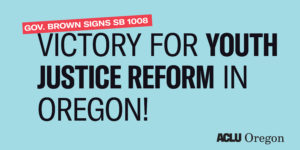
Governor Kate Brown recently signed the historic juvenile justice reform bill — Senate Bill 1008 — into law, ensuring that our youth justice system focuses on education, rehabilitation, and opportunity, not prison. People like you made hundreds of phone calls and sent thousands of emails to legislators to help pass this important legislation.
Oregonians believe that our youth justice system should focus on
prevention and rehabilitation, and value forgiveness and second chances.
Senate Bill 1008 passed with bipartisan support. Now Oregon will end
the practice of automatically trying youth as adults
for certain crimes, will ensure all youth convicted of a crime will
receive a chance at parole, and provide youth with the best chance to
repair the damage they’ve caused, while also healing their own trauma
and getting them the help they need.
Thanks for sticking with us,
ACLU of Oregon
Note that our Klamath County League engaged in a year-long study on criminal justice and immigration issues, including juvenile justice, in 2018-19, which will be presented as a complete report by the end of 2019.
Jordan Cove has underestimated Oregonians
Pembina Pipeline Corporation, the Canadian
company behind the Jordan Cove liquefied natural gas (LNG) terminal and
Pacific Connector pipeline, thought it had Oregon pegged. Since
inheriting the project from Veresen in 2017, Pembina has taken the
attitude of a benevolent benefactor taking pity on a rural, economically
depressed region.
On July 5, the comment
period on the Draft Environmental Impact Statement (DEIS) for the
project ended. Many of the original comments, submitted by state
agencies, county commissioners, tribal members, landowners, fishermen,
conservation organizations, climate activists and Oregon citizens,
pointed out inaccuracies, errors and vague or inadequate statements
about how the company plans to mitigate the project’s negative impacts.
Looks like Pembina has some ’splaining to do.
During
an investors meeting in May, Pembina CEO Michael Dilger said he thought
Oregon state agencies were “overwhelmed” by the project application for
Jordan Cove and Pacific Connector. “ they haven’t seen billion-dollar
projects, let alone billion-dollar hydrocarbon projects,” he said.
“Their regulators aren’t quite capable of this.”
In
fact, Oregon agencies, including the Department of Geology and Mineral
Industries (DOGAMI), Department of Environmental Quality (DEQ), and
Department of State Lands (DSL) have consistently pushed the company to
supply additional information, correct inaccuracies and supplement vague
statements with specific details. In late 2017, DOGAMI submitted
comments to the Federal Energy Regulatory Commission (FERC), pointing
out “insufficiencies in the scientific and engineering analyses related
to geologic hazards.” This spring, DEQ denied the project water quality
certification, and DSL sent Pembina a nine-page letter requesting
additional information. Most recently, Oregon agencies collectively
submitted over 200 pages of comments to FERC, stating numerous concerns
about the project’s safety, environmental consequences and impacts to
landowners, and recommending that FERC balance the project’s predicted
economic benefits with its negative consequences, which include higher
domestic natural gas prices and property devalued by the pipeline.
Pembina
has sent land agents to ply landowners with ever-increasing offers for
easements for the 36-inch pipeline. Some landowners report these agents
used underhanded tactics to persuade them to sell: misrepresenting the
percentage of easements already secured, declaring that the project was a
“done deal,” and even threatening some property owners with eminent
domain.
Nonetheless, at least 90 private
landowners have refused to sign easement agreements. Over the protracted
process, several have become skilled organizers and experts on the
regulatory process — a great expenditure of time, money and emotional
energy. In its information request, the DSL referred to the “substantial
comments” of several individuals, many of them landowners, and it was
the arguments of landowners that contributed to FERC’s denial of the
project in 2016.
Before the 2018 election,
the company donated heavily to Oregon Political Action Committees
(PACs) and to several individual candidates in Coos County. While some
elected officials have capitulated, others maintain the project is bad
for their constituents. Jackson County commissioners decided the project
is not worth the risks, even though the county would receive an
estimated $5.3 million annually in property tax revenue from Pembina. In
comments to FERC, commissioners summarized their concerns, which
include negative impacts to waterways and drinking water wells, the lack
of a wildfire mitigation plan, and the use of eminent domain in
exchange for no clear public benefits.
In
fall of 2018, Pembina launched a multi-million dollar PR blitz. In a
blizzard of glossy brochures and deluge of radio and television ads,
Pembina presented itself as a friendly “neighbor” blessing southwest
Oregon with an environmentally benign project and promising a windfall
of jobs.
Most Oregonians saw through the
slick messaging. In fact, recent polling shows that opposition to the
project across the state, regardless of political affiliation, is
stronger than ever. The poll, yet to be released, includes a question
about Jordan Cove that is worded similarly to a question from a 2018
poll. While the percentage of those opposing the project held steady at
57 percent, the portion of those who strongly oppose the project grew
from 30 to 35 percent. At the same time, support fell from 22 to 19
percent, and only 4 percent say they strongly support the project.
By
the time FERC makes its final decision on Jordan Cove next January,
Oregon will have been dealing with the threat of this project for 15
years. The protracted process is not only testing our mettle, it is
showing us who we are. Whether rural or urban, young or old,
conservative, liberal or something in between, Oregonians can’t be
bought, and we can’t be fooled.
Deb Evans is an affected landowner who owns timber property in Klamath County. Juliet Grable is a writer who lives in Jackson County.
–originally published Sunday, July 21st 2019 in the Medford Oregon Mail Tribune. The authors are LWV members.
Klamath County and Rogue valley Women meet for joint discussions
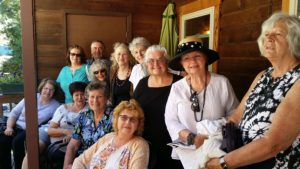
On July 21, 2019 nearly 20 women and men from Klamath County and Rogue Valley met for lunch and discussions at the Greensprings Inn on Highway 66. Friendships were made and renewed, mutual concerns were discussed, and connections were made for mutual support. Everyone enjoyed the lunch and relaxed atmosphere so much that they agreed to try to make this an annual summer event.
statewide health care coverage law, July 17, 2019
SB 770 was in the logjam of bills while the Senate Rs walked out. But yesterday and today the Senate and House managed to pass, under suspension of the rules, our bill. To get the details go to https://olis.leg.state.or.us/liz/2019R1/Measures/Overview/SB770?pubDate=2019-06-30-16-11 You can see the history and who voted how at various points. This is great news. When the Governor signs it and starts to appoint members of the Taskforce/Commission we can monitor the process and hopefully be involved at appropriate times.
On July 4, a joint statement in opposition to the Jordan Cover Pipeline was submitted by four local LWV chapters, including Klamath County. You may read the introduction to the document below and read the complete document HERE. We are proud of our participation in this important work and will remain active in following up on all developments until this issue is resolved.
We write representing the League of Women Voters of Coos County (LWVCC), LWV of Umpqua Valley (LWVUV), LWV of Rogue Valley (LWVRV), and LWV of Klamath County (LWVKC). We are grassroots nonpartisan, political organizations operating in the four counties in Oregon that would be directly affected by the construction and operations of the proposed Jordan Cove Liquefied Natural Gas (JCLNG) and Pacific Connector Gas Pipeline (PCGP), commonly referred to collectively as the Jordan Cove Energy Project (JCEP). Our detailed review of the Draft Environmental Impact Statement (DEIS) for this project shows that the projects are in direct conflict with many of the state and national League of Women Voters positions.
Since the 1950s, the League has been in the forefront of efforts to protect air, land, and water resources. The League of Women Voters of the United States (LWVUS) “believes that natural resources should be managed as interrelated parts of life-supporting ecosystems. Resources should be conserved and protected to assure their future availability. Pollution of these resources should be controlled in order to preserve the physical, chemical and biological integrity of ecosystems and to protect public health.” The League of Women Voters of Oregon (LWVOR) “ . . . opposes degradation of all of Oregon’s surface and ground water. . . .” and declares that climate change is the greatest environmental challenge of our generation. The following resolution passed almost unanimously at the 2018 National LWV Convention: “The League of Women Voters supports a set of climate assessment criteria that ensures that energy policies align with current climate science. These criteria require that the latest climate science be used to evaluate proposed energy policies and major projects [emphasis added] in light of the globally-agreed-upon goal of limiting global warming to 1.5 degrees C, informed by the successful spirit of global cooperation as affirmed in the UN COP 21 Paris agreement.” Finally, at the 2019 LWVOR Convention, a resolution declaring a “climate emergency” passed unanimously. We, as local Leagues, are part of the national and state LWV. Based on these positions and our understanding of the likely impacts of the proposed JCEP on critical environmental resources and communities in our areas, the LWVCC, LWVUV, LWVRV, and LWVKC submit jointly this comment on the DEIS for the JCEP project.
On the basis of LWV positions and for reasons we provide in this comment, we respectfully but strenuously urge the FERC to deny with prejudice any and all permits and approvals sought by the JCEP within your jurisdiction.
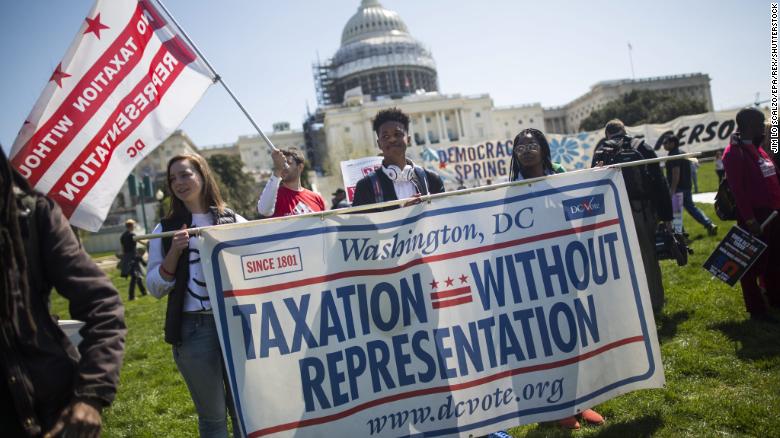
House committee to hold hearing on DC statehood bill this summer
Read the article at CNN HERE. This is an example of a non-partisan voter support issue that the League endorses and promotes.
Get Off Your Duff: Political Volunteering With a Disability
Read this article at New Mobility. The League actively supports voter rights and action at every level. Learn how you can help promote voting rights at the local or state level.
LWV Klamath county supports climate change lawsuit: June 4, 2019
Several members of the LWV Klamath County including Leslie Lowe, Diane Eastman-Shockey, and Courtney Neubauer gathered in front of the LNG pipeline offices to hand out 25 copies of this HANDOUT.
They received lots of thumbs up from drivers. Even better, they observed no negative behaviors in pedestrians or drivers. 7 people total came to hold signs. They accomplished what they set out to do, which was bring awareness of this lawsuit to our community. Event Signage was created by Teresa Wilson and Leslie Lowe.
lwv Oregon State Convention, Ashland, OR may 17-19
Two members of the LWV Klamath County attended the recent state convention to represent our rural area. Emily Strauss and Julie Ryder attended the day-and-a half- series of meetings to share, listen, and vote on business. Read a summary of the convention HERE.
The League recently sent a letter to U.S. Senators encouraging them to support and pass a resolution making September National Democracy Month. This is an example of how the League works to promote democracy and voting rights for everyone. If you’re interested in supporting this work, contribute to the League, contact your Senator, or keep informed about the progress of this initiative.
letter to u.s. senators
Dear Senator:
The League of Women Voters, with affiliates in communities across
your state, joins four former Senate Majority Leaders, Bob Dole, George
Mitchell, Tom Daschle, and Trent Lott, who serve on the board of the
American Democracy Month Council (ADMC) in urging your co-sponsorship of
a bipartisan Senate resolution to establish September 2019 as National
Democracy Month. Also joining in this effort are many distinguished
members of the ADMC’s Advisory Board, including George Stephanopoulos,
John Negroponte, Tony Blinken, Norm Ornstein, Olympia Snowe, and Tom
Korologos, among others.
The Resolution is being introduced by the Chairman and Ranking
Minority Member of the Senate Judiciary Committee, Lindsey Graham and
Dianne Feinstein, respectively. The similar resolution passed last year
with 25% of the Senate joining as co-sponsors.
history of the league of women voters
Born out of the movement that gave women the right to vote, the
League of Women Voters is the only organization founded before the 19th
Amendment that is still in existence today. Our mission of empowering
voters and defending democracy puts us on the front lines of civic
engagement and voter empowerment. There is growing awareness of the need
to reform and support our democracy in our country. The 2018 election
was a referendum in support of our democracy, but there is still much
work to be done. We believe that the declaration of September as
Democracy Month will also pair well with National Voter Registration Day
(NVRD), a day where grassroots organizations work together to register
voters. The League has maintained the status as the largest on the
ground partner when registering voters in communities across the country
on this day. Just as Black History Month helped educate Americans about
African American history, so too National Democracy Month will focus
American citizens on a revitalization of civic education and
understanding and appreciation for our democracy.
To co-sponsor the resolution, please contact Blair Bjellos of Chairman Graham’s staff at Blair_Bjellos@judiciary-rep.senate.gov or Christopher Gaspar in Senator Feinstein’s office at Christopher_Gaspar@feinstein.senate.gov.
We look forward to hearing of your co-sponsorship of this important resolution.
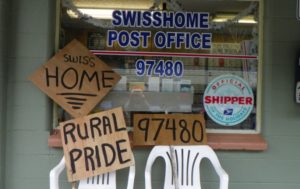
The Rural Organizing Project is a grass-roots organization that seeks to advocate democracy in Rural Oregon. It began in 1991 and today works in many areas. These include
Up in Arms: A Guide to Oregon’s Patriot Movement. ROP in partnership with Political Research Associates is releasing Up in Arms: A Guide to Oregon’s Patriot Movement. This is a groundbreaking toolkit designed to provide resources and tools to Oregon’s small towns and rural communities. These towns are under often siege from militias and other Patriot movements.
Rural Organizing Voices. Rural Organizing Voices is an oral history project to document and share the stories, lessons, organizing tools and wisdom amassed through ROP’s 26-year history of grassroots organizing in rural and small town Oregon.
Democracy & Civic Participation. ROP and Human Dignity Groups promote year-round rural civic engagement. This builds power on local, state and national levels and facilitates democratic participation in our communities.
upcoming local action
Courtney Neubauer, local organizer working with ROP and newly seated on the LWV Klamath County Board, is putting on a policy and karaoke night at El Palacio’s Mexican RestaurantMay 18th, 2019 6-10pm. She will have tables set up so the public can learn about Paid Family Medical Leave, Driver’s Licenses for All, and No-LNG. All of the tables will be set up so that anyone can send their representative a postcard and share their opinion. There will also be an opportunity for folks to say what policy issues they want to learn about in the future! The RSVP form is: http://bit.ly/MayPolicyParty and the FB event is: https://www.facebook.com/events/1250988618384238/?active_tab=about
You may contact Courtney directly by email for further information.
Results of the annual meeting: our members and board met on April 18, 2019 for dinner and the annual meeting at the delightful new Terra Veg vegan restaurant on E. Main St. Our guest speaker was Klamath Falls mayor Carol Westfall, who spoke to us about city issues and what’s it’s like to be a woman in power in this traditionally male-dominated city political structure.
new study approved
During the meeting, members and board voted to begin a new study project next year. This will deal with the issue of merging the Klamath Falls city boundary with the “Urban Growth” boundary. The concept is to merge these two boundaries to form a single entity.
The League understands that various people in Klamath Falls have discussed this issue for many years but it has always faced partisan opposition from various groups due to a number of issues including taxation, provision of infrastructure, and public safety. Now the league would like to focus on identifying major stakeholders who should ultimately meet to resolve this issue. The goal would be to speak to all the relevant parties to try to form a basis for a committee to work together. This committee could bring issues to the ballot or otherwise work to merge these boundaries.
other decisions
The board will consider new board members and officers at the next regular meeting. Courtney Neubauer was elected to serve on the board. Leslie Lowe will continue as Treasurer, Karen Kunz will continue as Secretary. The position of President will become open and will be determined at the meeting of May 16.
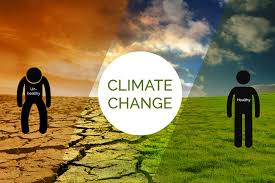
The LWV’s position on climate change is important for all league members and voters interested in this issue.
Recently the LWV US has added a Toolkit of information for league members and other interested parties regarding the League’s position on Climate Change. The recent League Update included Talking Points on the Green New Deal, which can be found HERE.
Here you can read about the League’s Position Paper on climate change as of January, 2019. It includes several resolutions that provide further guidance and emphasis for Leagues wishing to engage in climate action. Here is where state and local leagues may find information and language to use when contacting local legislators. It also gives guidance on how to influence their support of federal legislation on climate change.
This is another example of how national and state leagues work together to support position papers developed after close study. When you join our Klamath County League, you also join the national league and lend your voice to discussions of national issues such as climate change.